

If you’ve ever tried to manage a team of real estate agents, you already know—it’s not like managing employees in a typical 9-to-5 job. Agents are independent by nature. They thrive on flexibility, competition, and commission. Early in my career, I thought I could manage agents the same way I led my sales team in a corporate setting. Big mistake. Within three months, I had three top producers threatening to leave because they felt “micromanaged.” That experience forced me to rethink everything I knew about leadership.
Managing real estate agents is about influence, not control. It’s about creating the kind of environment where agents feel supported, yet self-directed. Over the years, I’ve built and led multiple teams—from boutique brokerages to 100-agent offices—and I’ve learned there’s a clear difference between running a real estate business and leading real estate agents. In this guide, I’ll break down the systems, leadership habits, and communication tactics that actually work in today’s competitive market.
By the end, you’ll not only understand how to manage real estate agents, but how to build a culture that attracts and keeps top performers.
Understanding the Realities of Managing Agents
Before you can truly master real estate team management, you have to accept one fundamental truth: agents don’t want a boss—they want a leader.
When I first stepped into management, I thought my job was to set rules, track numbers, and “hold people accountable.” That approach failed fast. What I learned is that real estate agents are entrepreneurs in disguise. They chose this business because they want freedom, flexibility, and control over their income. If you treat them like employees, you’ll lose them to the brokerage down the street.
So, the first step in learning how to manage real estate agents is shifting your mindset. You’re not managing behavior—you’re managing motivation.
For example, I had one agent who was incredible at open houses but hated cold calling. Instead of forcing her into a one-size-fits-all lead generation system, I doubled down on her strengths. We built her marketing around live events and client relationships. Within six months, her production tripled.
That’s the power of tailored leadership—understanding what drives each agent and creating systems that amplify their strengths. If you want a deeper look at structuring roles, responsibilities, and leadership frameworks, check out this comprehensive real estate team guide—it’s one of the best resources I’ve seen on building effective team foundations.
Building Systems That Drive Performance
When people ask me how to manage real estate agents effectively, I always start with one principle: your systems determine your team’s success. It doesn’t matter how talented your agents are—without structure, even the best performers will hit a ceiling.
Early on, I ran my brokerage without any consistent processes. Every agent used their own CRM (or none at all), listing presentations were inconsistent, and team meetings were more like therapy sessions than business reviews. We had drive, but no direction. It wasn’t until I implemented a few core systems that production, morale, and retention skyrocketed.
Let’s break down what those systems look like in real-world real estate team management.
Systemize Lead Generation and Conversion
The first thing you must standardize is lead generation. Inconsistent prospecting is the silent killer of team performance. Every agent should have a predictable way to fill their pipeline, but that doesn’t mean everyone does it the same way.
Here’s what worked for me:
- Daily Prospecting Blocks: We dedicated 9:00–11:00 AM for lead follow-up and new outreach. Phones on, doors closed, and everyone accountable.
- Track by Source, Not Just Volume: Instead of measuring leads by number, track conversion rates per source. You’ll quickly see who’s converting open house leads versus online ones.
- Play to Strengths: Some agents excel at open houses; others thrive with social media. Build your team’s lead system around their strengths, not generic scripts.
Create Repeatable Client Experience Standards
One of the biggest lessons I’ve learned in how to manage real estate agents is this: consistency wins clients, chaos loses them.
I once had two agents handle nearly identical listings in the same neighborhood. One used professional photography, a custom marketing plan, and hosted a twilight open house. The other snapped phone photos and posted the property late on a Friday night. Guess whose listing sold for 4% more?
To prevent those gaps, we created Client Experience Standards—a checklist for every stage of the process, from listing prep to post-closing follow-up. That meant every seller, buyer, and referral partner got the same premium experience, regardless of which agent handled them.
Develop an Agent Operating System (AOS)
Think of your Agent Operating System as the central nervous system of your business. It should connect your tools, processes, and communication. For example:
- CRM: A shared database (we used Follow Up Boss) that tracked leads, follow-ups, and pipeline stages.
- Weekly Dashboards: I had a simple spreadsheet showing listings taken, pendings, and closed volume per agent. We reviewed it every Monday to spot trends and celebrate wins.
- Training & Resources: Every onboarding document, template, and checklist lived in one shared drive.
Once your AOS is in place, you’ll notice how much easier it becomes to lead. Agents have clarity. You have data. And performance becomes predictable.
For team leaders ready to take this structure to the next level, the how to start a real estate brokerage guide provides a step-by-step blueprint for systemizing growth, compliance, and scalability.
Accountability Without Micromanagement
There’s a fine line between accountability and control—and if you cross it, you’ll lose your best agents fast.
When I first started managing, I made the classic mistake of holding weekly “performance meetings” that felt like interrogations. Agents dreaded them. Production dipped, and trust evaporated. So, I flipped the model.
Instead of asking, “What did you do this week?”, I started asking, “Where do you need support?”
We built a culture of self-accountability using three simple tools:
- Weekly Scorecards: Agents filled out their own key metrics—calls made, appointments set, listings signed. I didn’t track them; they did.
- One-on-One Coaching Sessions: Every two weeks, we reviewed their goals, pipeline, and mindset—not just numbers.
- Open Dashboard: Everyone could see team stats, which naturally created peer accountability.
The result? Production increased by nearly 30% in one quarter because agents started holding themselves accountable.
That’s when I truly understood how to manage real estate agents effectively—it’s not about managing their activity, but managing the systems that shape their behavior.

Standardized Communication Channels
Here’s a leadership truth I learned the hard way: when communication breaks down, productivity collapses.
At one point, I had agents texting me, emailing me, Slacking me, and sending Facebook messages—all about the same transaction. It was chaos. So, we implemented a team communication hierarchy:
- Slack for real-time updates
- Email for client-facing communication
- Asana for project and transaction management
- Weekly team huddle for problem-solving and announcements
This simple system cut my daily interruptions in half and made sure every agent knew where to go for help, updates, and accountability.
As a leader, your communication systems should protect your time and empower your agents to operate independently. That’s how you create leverage—and leverage is the difference between running a team and scaling one.
Performance Reviews That Drive Growth
If you’ve ever sat through a traditional annual review, you know how pointless they can feel. In real estate, waiting a year to evaluate performance is a recipe for turnover.
Instead, I built a quarterly growth review system designed around four key questions:
- What are you most proud of this quarter?
- What bottlenecks slowed you down?
- What do you want to achieve next quarter?
- What support do you need from leadership?
These conversations were short but powerful. They kept every agent focused on growth, not just volume. I also tied these reviews to incentive programs—marketing support, leads, or bonus splits for hitting targets.
It’s not about dangling carrots; it’s about aligning incentives with progress. That’s what modern real estate team management should look like—coaching through clarity and systems.
Scaling Systems as You Grow
Here’s the final truth about systems: what works for five agents won’t work for fifty.
As my brokerage grew, I had to evolve from simple spreadsheets to automated dashboards, from verbal check-ins to standardized SOPs. Scaling systems doesn’t mean adding complexity—it means removing dependency on you.
If your agents can’t function without your constant input, you don’t have a system—you have a bottleneck.
That’s why I always recommend building systems with scalability in mind from day one. Map your workflows, document your processes, and leverage tech early.
Coaching, Not Controlling: The Secret to Retention in Real Estate Team Management
When agents ask me how I’ve managed to keep my top producers for years while other brokerages constantly churn through talent, my answer is simple: I stopped managing and started coaching.
The moment I understood that shift was the moment my retention skyrocketed.
Early in my career, I ran my office like a machine—metrics, quotas, and compliance. On paper, it worked. We hit numbers. But emotionally, the team was running on fumes. One afternoon, my top agent told me, “I feel like a statistic, not a person.” That comment stung, but it changed everything.
That day, I threw out my management playbook and replaced it with a coaching framework built around trust, performance, and purpose. And that’s the key to mastering how to manage real estate agents—you can’t control them into greatness; you coach them into it.
Build Trust Before You Build Systems
No system or structure matters if your agents don’t trust you.
Trust starts with one simple rule: keep your promises. If you say you’ll provide better lead support or marketing tools, deliver. I’ve seen too many team leaders make big promises to attract agents, only to underdeliver later. That’s the fastest way to lose credibility.
When I took over a struggling office years ago, the agents didn’t believe a word I said. So instead of pushing production goals, I started with what they needed most—support. I spent two weeks sitting in on listing appointments, helping with open houses, and rewriting their listing copy. Slowly, the tone shifted. They saw that I wasn’t above doing the work. That earned trust.
Coach Through Conversations, Not Commands
The best managers in real estate aren’t dictators—they’re facilitators of growth.
I built a coaching rhythm that transformed how my agents performed. Every week, we held 30-minute one-on-one sessions that focused on three areas: mindset, pipeline, and skill development. Here’s the framework I used:
- Mindset Check: What’s been going well this week? What’s been challenging?
- Pipeline Review: Where are you stuck in your deals or lead flow?
- Skill Gap Coaching: Identify one skill to improve (e.g., handling objections, pricing strategies).
This format turned our meetings from “status updates” into growth sessions. Agents left energized and equipped, not drained.
In real estate team management, coaching isn’t about fixing problems—it’s about developing people.
Celebrate Progress, Not Just Closings
One of the easiest ways to motivate agents is also one of the most overlooked—recognition.
Years ago, I noticed my new agents were burning out fast. They were working hard but rarely saw immediate results. So, I started recognizing progress, not just production. If someone booked three listing appointments in a week, we celebrated it in our Monday meeting. If another finally nailed her first price reduction conversation, that was a win too.
This kind of recognition creates momentum. Agents start associating growth with success, not just closings. And momentum is everything in this business.
A good resource that touches on this people-first leadership approach is the real estate broker vs agent career guide—it’s a great reminder that managing agents is really about understanding the career mindset that drives them.
Create a Culture of Learning
A high-performing team is a learning team.
Every Friday morning, we hosted “Skill Labs” where agents would role-play real scenarios—pricing conversations, FSBO objections, client follow-ups. I didn’t lecture; I facilitated. Agents learned more from each other than they ever did from me.
Over time, these sessions became the heartbeat of our culture. Agents looked forward to sharing what worked, and newer team members got real-time coaching from their peers. It wasn’t mandatory, but attendance was always full. That’s how you know you’ve built something that matters.
Measure What Actually Matters
If you want to know how to manage real estate agents effectively, here’s a hard truth: stop obsessing over vanity metrics.
Transactions and volume matter, yes—but they’re lagging indicators. The real drivers are consistency, skill improvement, and mindset. I measure those with three simple KPIs:
- Lead-to-appointment ratio
- Listing presentation conversion rate
- Client satisfaction score (via follow-up surveys)
By focusing on the inputs rather than just the outputs, you’ll catch performance issues before they become problems—and your agents will feel coached, not controlled.
Empower, Don’t Enable
Your job as a leader isn’t to remove every obstacle—it’s to teach agents how to solve problems themselves.
When agents come to me with an issue (“My deal’s falling apart,” “My client’s ghosting me”), I resist the urge to fix it. Instead, I ask, “What do you think your next best move is?” Nine times out of ten, they already know the answer. They just need permission to act.
That’s how you build independence and confidence. When your team starts solving problems without you, that’s the moment you transition from manager to leader.
How to Use Highnote to Support Your Agents
If you want to know how to manage real estate agents in today’s digital market, here’s the truth: your leadership tools matter just as much as your leadership style. The right platform can transform how your team collaborates, communicates, and delivers results. For me, that platform is Highnote.
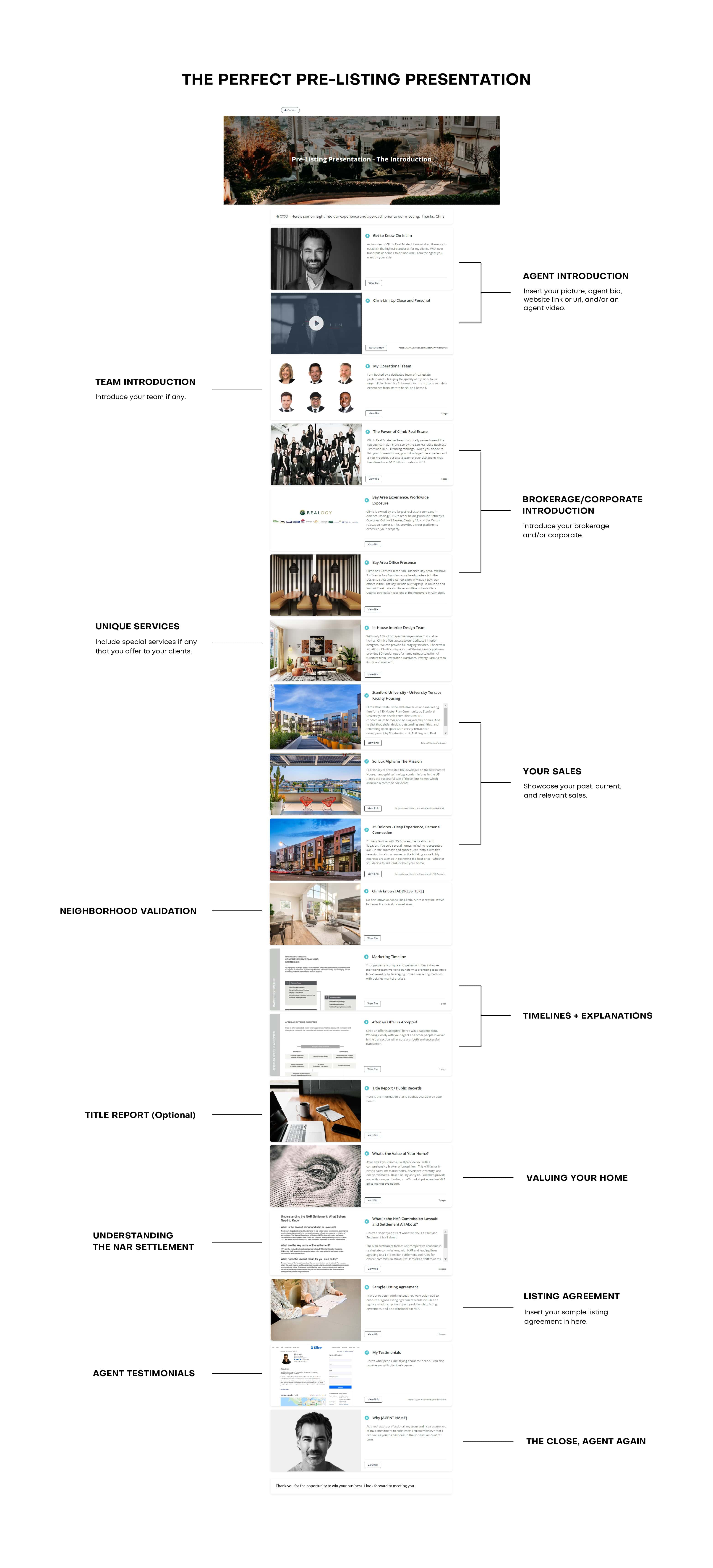
At first, Highnote was built to simplify listing presentations. My agents were using clunky PDFs, massive email attachments, and Dropbox links that clients never opened. It looked unprofessional and felt chaotic. Once we switched to Highnote, everything changed.
Here’s exactly how I use Highnote to support my agents—and how you can, too.
1. Elevate Your Team’s First Impression with Highnote Presentations
When I coach new managers on real estate team management, I tell them this: your agents’ first impression sets the tone for every client relationship. Highnote gives your agents a professional edge without adding complexity.
Each of my agents uses a pre-built Highnote template for:
- Listing presentations — polished, branded, and ready to customize for each property.
- Buyer presentations— with embedded videos, testimonials, and financing resources.
- Recruiting decks — when agents want to bring on referral partners or junior team members.
This isn’t just about presentation quality; it’s about consistency. Every Highnote presentation reflects our brand, our standards, and our commitment to excellence—without me having to micromanage a single file.

2. Centralize Resources and Training
Before Highnote, onboarding a new agent on my team took weeks. We’d email docs, share links, and half the time, they’d lose something important. Now, every new hire gets a single Highnote link that includes:
- Our onboarding roadmap
- Training videos and scripts
- Marketing templates and brand assets
- CRM login and lead workflow guides
They can access it anytime, anywhere. I can see when they’ve opened materials, which helps me track engagement and tailor my coaching.
That’s the kind of leverage modern real estate team management requires—automated structure without sacrificing the human touch.
3. Improve Client Experience and Agent Confidence
Real estate agents often struggle with presentation confidence. They know their stuff, but they don’t always have the visuals or flow to back it up. Highnote eliminates that gap.
One of my newer agents, Melissa, had just joined the team from a solo practice. Her listing presentations were good—but inconsistent. I set her up with our Highnote listing template. The next week, she landed two listings back-to-back. She told me, “I didn’t just feel more professional—I looked more professional.”
When your agents have tools that make them look and feel like experts, their confidence (and conversion rates) soar.
4. Streamline Communication and Follow-Up
One of the biggest frustrations in managing agents is keeping everyone aligned—especially on the follow-up process. Highnote helps here too.
My team uses Highnote to create personalized follow-up packages after every listing appointment or showing. It includes market comps, testimonials, a digital business card, and a quick video message. Clients love it, and it keeps our brand top of mind.
I can view analytics—who opened what, when, and for how long—which gives me incredible insight into both client engagement and agent performance. That’s actionable data every manager should have.
5. Simplify Recruiting and Retention
Finally, if you’re serious about scaling, use Highnote for agent recruiting. I built a custom “Join Our Team” presentation highlighting our culture, systems, and agent success stories. It’s polished, personal, and far more impactful than a generic email pitch.
Here’s the best part: when new recruits see how organized and tech-forward our team is, it reinforces their confidence in joining us. You’re not just telling them you run a professional operation—you’re showing them.
Retention and Recruitment: Managing a Team Agents Don’t Want to Leave
When people ask me how to manage real estate agents and actually keep them long-term, I always say this: You don’t retain agents—you re-earn them every quarter.
Agents are independent entrepreneurs. They’ll stay loyal to the team that helps them grow, make money, and feel valued. The moment those three things stop happening, they’re already halfway out the door.
So, if you want to build a high-retention team, your strategy can’t just be about signing agents—it has to be about supporting them after they sign. That’s the heart of effective real estate team management.
Let’s break this down into a clear framework.
Understand Why Agents Leave (and Stay)
When I took over my first office, turnover was brutal—about 40% per year. Before making any changes, I interviewed every departing agent. Their feedback boiled down to three things:
Why They Left | Why They Stayed |
No consistent lead support | Access to high-quality leads |
Felt undervalued or ignored | Regular coaching & recognition |
Weak marketing tools | Strong, branded presentation materials |
Poor communication | Transparent systems & leadership |
No growth path | Clear advancement opportunities |
That table became my roadmap. Once I fixed those core pain points, retention improved almost overnight. Within 18 months, turnover dropped below 10%.
When you’re figuring out how to manage real estate agents successfully, start by understanding your attrition story. The numbers tell you what’s happening—but the exit conversations tell you why.
Make Retention a System, Not a Sentiment
Retention isn’t about pizza Fridays or motivational speeches. It’s about structure.
Here’s the retention rhythm I’ve used for years:
System | Purpose | Frequency |
One-on-One Coaching | Track growth & remove obstacles | Bi-weekly |
Skill Labs | Build confidence through peer learning | Weekly |
Milestone Recognition | Celebrate wins, not just volume | Monthly |
Quarterly Growth Reviews | Align personal & team goals | Quarterly |
Annual Business Planning | Set vision and recommit to the team | Yearly |
By documenting and systemizing retention, you create predictable engagement. Agents know what support to expect—and when. That’s how trust compounds.
Recruiting: Attract, Don’t Chase
Recruiting agents used to be a grind—cold calls, coffee meetings, and generic “we’re hiring” pitches. That doesn’t work anymore. The best recruiting happens when your current agents become your ambassadors.
Your brand should attract the kind of people who already fit your culture. I use what I call the 3C Recruiting Filter:
Filter | Description | Example |
Culture Fit | Do they align with our team values? | Collaboration, integrity, results |
Competence | Can they deliver quality client experiences? | Proven track record or strong potential |
Commitment | Are they willing to grow and be coached? | Open to accountability and structure |
Instead of chasing anyone with a license, focus on these three Cs. You’ll build a team that fits—and stays.
Showcase Your Value Through Presentation, Not Promises
If you want to elevate your recruiting process, stop relying on conversation alone—show what makes your team different.
I built a simple digital recruiting deck that outlined our systems, culture, and agent success stories. It replaced the typical “Why join us?” pitch with visuals and testimonials. Prospects loved it because it felt transparent and modern.
You can create something similar using templates like those in the real estate agent recruiting presentation guide—it’s a great starting point for showing your value clearly without overpromising.
Onboard for Retention, Not Just Readiness
Most teams focus on getting new agents up to speed. I focus on getting them invested.
My onboarding checklist includes both technical and emotional touchpoints:
Onboarding Focus | Why It Matters |
Systems Training | Helps agents feel competent fast |
Branding Orientation | Builds pride and identity |
Peer Mentorship | Creates early social connection |
Leadership Introduction | Opens communication channels |
First 30-Day Win Plan | Builds momentum and accountability |
By the time an agent closes their first deal, they already feel like part of something bigger. That’s how you anchor loyalty from day one.
Keep Recruiting Even When You Don’t Need To
Here’s one mistake I see managers make: they only recruit when they’re desperate. That’s like planting crops when you’re hungry—it’s too late.
I always keep a small list of potential recruits, even when my roster is full. I stay in touch, invite them to events, and share team wins. That way, when they’re ready to make a move, they think of me first.