

If you’re a RE/MAX agent, you’ve probably recently heard about the RE/MAX Master Pitch.
It’s one of the most powerful system the brand has rolled out to help agents win more listings consistently.
But here’s the reality I’ve seen over and over again in real estate:
Most agents understand the strategy, but they struggle with executing it consistently.
They attend the training.
They get the materials.
Then the process slowly breaks down in the real world.
The agents who win more listings aren’t just “doing the Master Pitch.”
They’ve turned it into a repeatable system.
In this guide, I’ll show you exactly how to use the RE/MAX Master Pitch the way top agents do – and how to turn it into a scalable listing-winning process.
What Is the RE/MAX Master Pitch?
The RE/MAX Master Pitch is a 3-phase framework for winning listings.
It combines strategy with high-quality branded marketing and sales tools to help agents guide sellers from the first interaction all the way through signing the listing agreement.
While the process is designed primarily for listings, it also works extremely well with buyers.
At its core, the Master Pitch is built around three phases of the seller conversation.
Phase 1: Pre-Sale (Before the Listing Appointment)
This is where you set the stage before you ever step into the home.
The goal is simple: Help the seller understand who you are and why they should work with you.
Typical materials in this phase include:
- Agent Endorsement Letter (signed by your RE/MAX brokerage)
- Printed pre-listing presentation
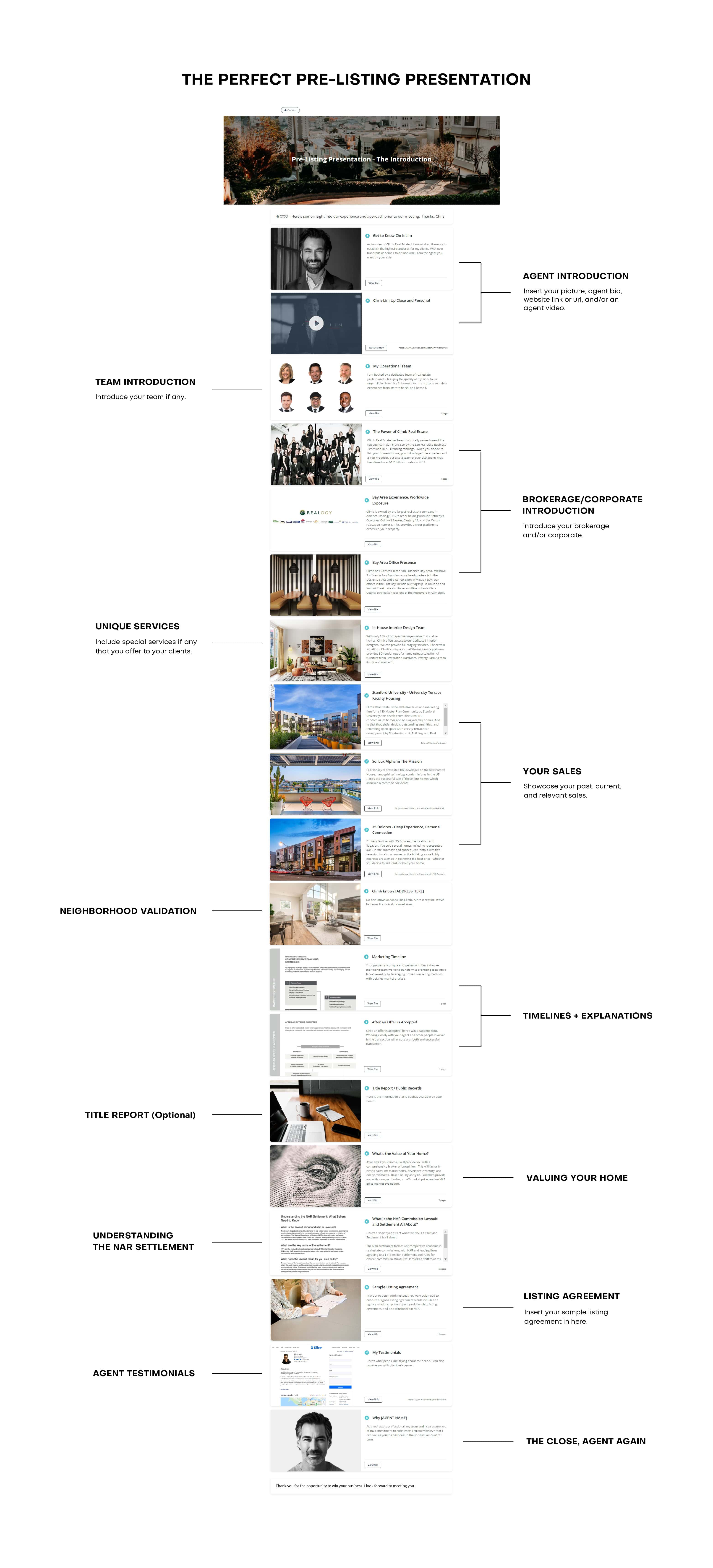
- A digital pre-listing presentation
- Marketing support materials showcasing the power of your partnership with REMAX
These materials are often mailed, dropped off, or sent digitally before the appointment.
The agents who win more listings consistently treat this phase seriously.
Because many prospects are inundated with agents (maybe they’ve asked friends for referrals, or they’ve checked out properties and agent listings online). You MUST have a way to distinguish yourself from other agents at first contact.
When a seller already understands your value before you walk through the door, the listing appointment becomes confirmation – not persuasion.
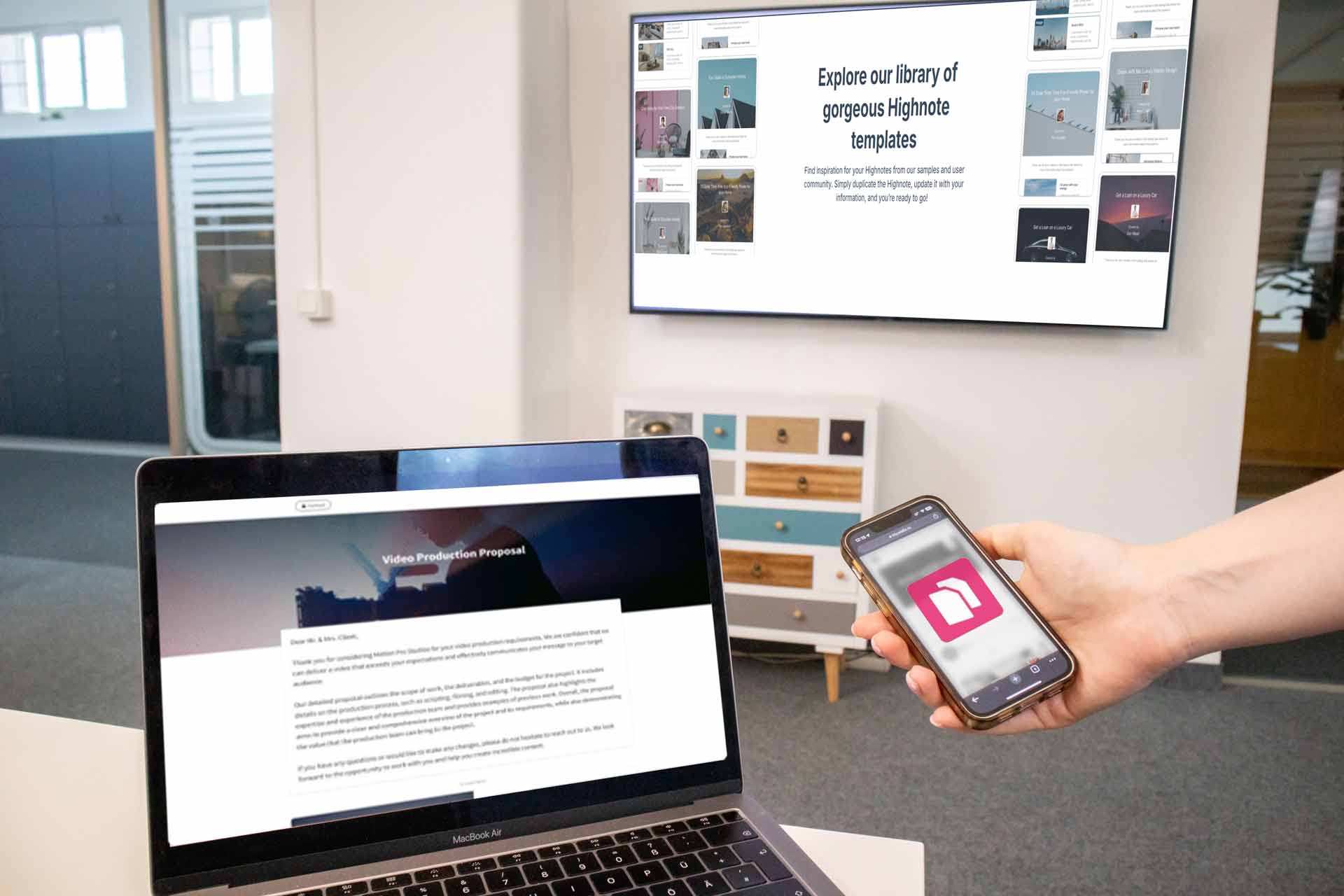
And, sending a digital pre-presentation is even more critical because some tools (like Highnote), show tracking and engagement – enabling you to determine what a client is interested in before you meet them.
Phase 2: The In-Person Meeting/Listing Presentation
This is where most agents believe the real decision happens.
In reality, the best agents know the decision has already started forming in Phase 1.
During the in-person presentation, you focus on:
- Addressing concerns raised during the pre-listing stage
- Walking the property
- Discussing the pricing strategy
- Reinforcing your marketing approach
- Customizing the conversation to the property and your prospective client.
The presentation itself is tailored to the seller’s situation, not just a generic slide deck.
Phase 3: Follow-Up and Close
This is where many listing presentations are actually won or lost.
After the appointment, agents typically send:
- A customized CMA
- Pricing strategy recommendations
- Sales and marketing plans
- Pre-listing preparation guidance
- The listing agreement
Traditionally, this follow-up has been delivered as:
- A printed CMA dropped off or mailed
- A PDF presentation
- Or an email recap
But today, many top agents are moving toward digital follow-up presentations that make it easier for sellers to review everything clearly and to let the agent see what they are looking at – similar to the pre-listing digital presentation, this provides insights as to what the client is thinking, allowing the agent to follow-up if necessary.
Why Most Agents Struggle With Master Pitch Implementation
At its core, the Master Pitch isn’t just a presentation.
It’s a structured conversation that happens across multiple touchpoints with a seller.
But here’s where many agents run into problems.
They understand the framework…
Yet the execution becomes inconsistent. On paper, the Master Pitch framework is incredibly effective.
Over the years, I’ve seen the same issues appear again and again.
They Rely on Printed Binders
The traditional listing presentation binder still exists.
And while it looks impressive on a table, it has some real limitations:
- It can’t be updated once delivered
- It’s difficult to personalize quickly
- It provides no insight into what the client actually cares about
The Presentation Becomes a Static PDF
Many agents moved from binders to PDF presentations, but the problem didn’t really disappear.
PDFs are still:
- Static
- Hard to navigate on mobile
- Difficult to personalize at scale
- Impossible to track
There’s No Personalization
Every listing is different.
Every seller has different concerns.
But when agents rely on a single presentation file, it often becomes a one-size-fits-all pitch.
The Master Pitch works best when the presentation reflects:
- The specific property
- The seller’s goals
- The local market conditions
There’s No Engagement Tracking
One of the biggest missed opportunities in traditional listing presentations is visibility into what the client actually looks at.
Imagine knowing:
- Which parts of your presentation the seller spent the most time on
- Whether they watched your marketing video
- If they reviewed the pricing strategy
- When they opened your follow-up materials
Follow-Up Becomes Weak
The final stage of the Master Pitch – follow-up – is often rushed.
Instead of reinforcing the presentation, agents send a quick email like:
“Just checking in to see if you had any questions.”
That approach rarely wins listings.
Strong follow-up should continue the conversation, not simply remind the seller you exist.
The Process Doesn’t Scale
Finally, many agents struggle to use the Master Pitch consistently because the process takes too much manual effort.
Creating new presentations, sending materials, and customizing documents can quickly become time-consuming.
So the system slowly breaks down.
Which brings us to the missing layer in the Master Pitch framework.
The Missing Layer: Turning Master Pitch Into a Digital Asset
The Master Pitch is a strategy.
But strategy alone isn’t enough.
To execute it consistently, many agents are now turning their listing presentations into digital, interactive experiences.
Instead of relying solely on printed materials or static PDFs, agents can deliver interactive digital presentations that sellers can explore at their own pace.
These presentations can include:
- Embedded introduction videos
- Client testimonials
- Marketing examples
- Interactive CMA summaries
- Property marketing plans
- Listing preparation checklists
Because the presentation is digital, it’s also mobile-friendly, making it easy for sellers to view everything from their phone or tablet.
Another major advantage is engagement tracking.
Agents can see:
- When a seller opens the presentation
- Which sections they spend time reviewing
- What content they return to
This insight helps you address specific concerns before the meeting even begins.
For example, if a seller spends most of their time reviewing pricing strategy, you already know that topic will likely be central to the conversation.
In that sense:
The Master Pitch provides the strategy. Highnote becomes part of the delivery system.
It allows agents to bring the framework to life in a way that is more flexible, trackable, and scalable.
How to Build Your Master Pitch Inside Highnote (Step-by-Step)
The RE/MAX Master Pitch becomes much more powerful when you treat it like a system instead of a one-time presentation.
Instead of building one listing deck, they create 2 digital presentations that match the 1 and 3 phase of the Master Pitch:
- A Pre-Listing Presentation
- A Listing Presentation
- A Follow-Up Presentation
The RE/MAX Master Pitch is designed as a three-phase process that helps you guide sellers from first contact to signed listing agreement.
Where many agents get stuck is in the execution between those phases.
They rely heavily on printed materials, static PDFs, or one-off emails that don’t fully support the structure of the Master Pitch.
That’s where digital presentations can help.
Highnote fits naturally into Phase 1 and Phase 3 of the Master Pitch by allowing you to deliver professional digital pre-listing and follow-up presentations that sellers can easily review before and after your meeting.
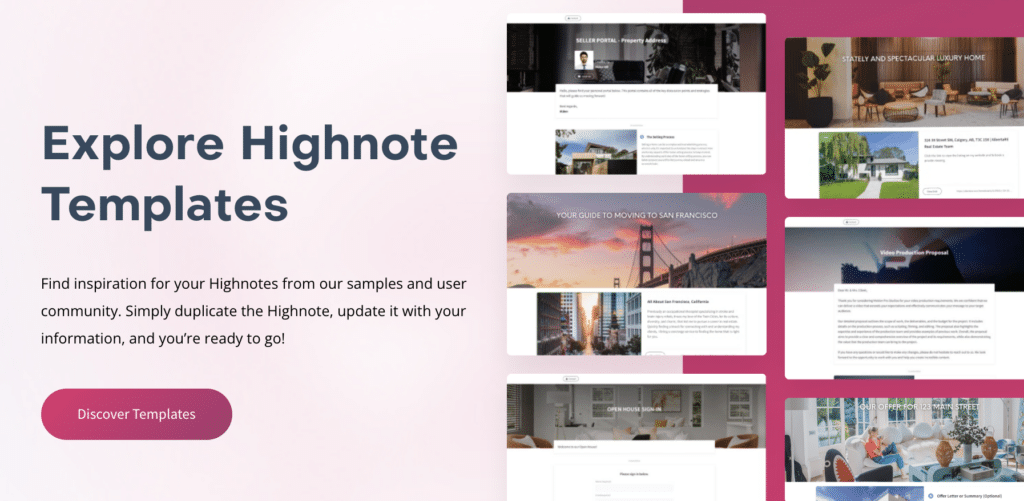
Instead of creating new materials every time, you can build reusable presentation templates that support the Master Pitch process.
Here’s what that can look like in practice.
Instead of creating new materials every time, you can build reusable presentation templates that support the Master Pitch process.
Here’s what that can look like in practice.
Step 1: Create Your Digital Pre-Listing Presentation (Phase 1)
Your pre-listing presentation is the first major touchpoint in the Master Pitch process.
The goal at this stage isn’t to sell the listing yet.
It’s to help the seller understand who you are, how you work, and why they should choose you before the listing appointment even happens.
Many agents send printed materials ahead of time. A digital presentation simply gives you another way to deliver that information.
A simple structure might include:
1. Introduction Video
Start with a short video introducing yourself and your approach.
This helps sellers connect with you immediately and puts a face to the name before the appointment.
2. Your Track Record
Show your results in the local market:
- Recent sales
- Average days on market
- Price-to-list ratio
- Neighborhood expertise
This section answers the seller’s silent question:
“Why should I hire you?”
3. Client Testimonials
Include a few short testimonials from past clients.
Social proof builds confidence before the meeting even begins.
4. Overview of Your Marketing Strategy
Give sellers a preview of how you market homes.
This helps position you as a professional with a clear process.
5. What Happens Next
End with a simple explanation of what will happen during the in-person appointment.
This reduces uncertainty and prepares the seller for the conversation.
With engagement tracking, you may also see which sections they spend the most time viewing – giving you valuable insight before the appointment.
Step 2: Conduct the In-Person Listing Presentation (Phase 2)
The second phase of the RE/MAX Master Pitch is the listing appointment itself.
This is where you walk the property, address the seller’s concerns, and present your strategy for pricing and marketing the home.
Because the seller has already received your pre-listing materials, the conversation can focus more on:
- The specific property
- The seller’s goals
- Pricing strategy and market conditions
Instead of spending most of the meeting introducing yourself, you can focus on customizing your approach to the property and the client’s needs.
Step 3: Create a Follow-Up Presentation
The final stage of the RE/MAX Master Pitch is where many agents miss opportunities.
Instead of sending a quick email recap, you can deliver a structured follow-up presentation that reinforces your value.
A typical follow-up presentation may include:
Customized CMA
A deeper breakdown of the recommended price range and comparable properties.
Final Pricing Strategy
Clarify the strategy discussed during the appointment.
Marketing Timeline
Show sellers exactly how the launch process will unfold.
Preparation Tips
Simple recommendations to help the property show at its best.
Listing Agreement
Provide the next step clearly so the seller knows how to move forward.
Because the presentation is digital, sellers can revisit the information at any time.
And when multiple decision-makers are involved, it becomes easier for them to share the presentation with family members or partners.
Step 4: Use Engagement Data to Guide Your Follow-Up
One of the biggest advantages of a digital master pitch system is visibility.
Instead of guessing what the seller is thinking, you can often see:
- Which sections they viewed
- How long they spent reviewing them
- Whether they returned to specific content
For example:
If a seller spends most of their time reviewing pricing strategy, you already know that topic matters most to them.
Your follow-up conversation can then focus on that specific concern.
This turns follow-up from a generic check-in into a targeted, relevant conversation.
And that’s often what moves the listing decision forward.
Master Pitch Example: From Static Deck to Trackable Listing Machine
Let’s look at how this process might work in a real situation.
An agent receives a listing inquiry from a homeowner considering selling.
Instead of waiting for the appointment, the agent sends a digital pre-listing presentation.
The seller opens the presentation that evening.
They spend time reviewing:
- Client testimonials
- The marketing strategy
- The agent’s recent sales
Because the agent can see engagement activity, they know the seller has already reviewed key sections.
When the listing appointment happens, the conversation becomes more focused.
The agent spends less time introducing themselves and more time discussing:
- Pricing strategy
- Market positioning
- The seller’s goals
After the appointment, the agent sends a custom follow-up presentation with the CMA and marketing plan.
The seller reviews the pricing strategy again the next day.
The agent sees the activity and follows up with a quick call to answer questions.
A few days later, the listing agreement is signed.
What made the difference wasn’t just the presentation itself.
It was the structured Master Pitch process combined with a digital delivery system that kept the conversation moving forward.
Frequently Asked Questions About the RE/MAX Master Pitch
What is the RE/MAX Master Pitch?
The RE/MAX Master Pitch is a three-phase framework designed to help agents win more listings.
The process includes:
- Pre-listing communication
- The in-person listing presentation
- Follow-up and closing materials
It combines strategy with branded marketing tools to guide sellers through the decision process.
Is the Master Pitch the same as a listing presentation?
Not exactly.
The listing presentation is just one part of the Master Pitch.
The full process includes communication before the appointment and after the appointment, not just the meeting itself.
Can you send your Master Pitch before the listing appointment?
Yes – and many agents do.
Sending a pre-listing presentation allows sellers to learn about your experience, marketing approach, and results before the meeting.
This can make the in-person appointment more productive.
How do top RE/MAX agents deliver the Master Pitch digitally?
Many agents now use digital presentation tools like Highnote to deliver their Master Pitch materials.
This allows them to:
- Send pre-listing presentations
- Customize listing presentations
- Deliver follow-up materials digitally
- Track engagement with their content
Digital delivery makes the Master Pitch easier to personalize, update, and reuse.
Final Thoughts
The RE/MAX Master Pitch provides a strong framework for winning listings.
But like any strategy, the results depend on how consistently it’s executed.
Agents who get the most from the system usually treat it as a repeatable process, not just a one-time presentation.
By structuring your materials across the three phases – pre-listing, listing presentation, and follow-up – you create multiple opportunities to demonstrate your value to sellers.
And when those presentations are delivered digitally, the process becomes easier to personalize, track, and scale as your business grows.