

You sent the proposal three days ago. The prospect went quiet. So you follow up, get a “we’re still reviewing it” – and now you’re left guessing whether they even opened page two. That blind spot costs deals.
PDF analytics changes that. Instead of static attachments that disappear into someone’s inbox, you get a live read on exactly how your prospect engages with every page – what they lingered on, what they skipped, when they came back, and whether they’re sharing it internally. The data turns document delivery into something closer to a real-time conversation.
This post breaks down what PDF analytics actually measures, what each signal tells you about buyer intent, and how tools like Highnote’s PDF tracking feature give you the visibility to follow up at exactly the right moment.
Key Insights
- PDF analytics tracks time-on-page, repeat views, session duration, and drop-off points – giving you behavioral data, not just open rates.
- A prospect spending 4+ minutes on your pricing slide is a buying signal. An immediate close after page 3 is an objection signal.
- Multiple opens within 24 hours typically means your document is being circulated internally to a decision-maker.
- Real-time open notifications let you follow up within minutes of engagement – the optimal window before interest cools.
- Highnote’s Share and Track converts any PDF, sales deck, or pitch into a trackable smart link with page-level analytics, AI-powered insights, and instant notifications – no redesign required.
Why Traditional PDF Sharing Leaves You Flying Blind
Email attachments are a black box. The moment you hit send, you lose visibility. You don’t know if your recipient opened the file at all, how far they got, or whether they shared it with three colleagues or no one. You’re making follow-up decisions based on silence – and silence means nothing.
The irony is that the documents you share are often the most important moments in your sales cycle – the pricing deck, the proposal, the listing presentation. These are the files your prospect evaluates you by. Yet most salespeople have zero data on what actually happens when a prospect sits down to read them.
Tracking email open rates helps, but it only tells you if the email was opened – not whether your 18-slide deck was read for 2 minutes or 25. That’s the gap PDF analytics fills.
Over 60% of documents are now opened on mobile devices first – which means how your content flows across pages matters as much as what it says.
What PDF Analytics Actually Measures
Modern document tracking tools – including Highnote’s Share and Track – capture behavioral signals at the page level. Here’s what the data tells you:
Time Spent Per Page
This is the most revealing metric. A prospect who spends 6 minutes on your pricing slide is in a fundamentally different mental state than one who spent 10 seconds before moving on. Time-on-page doesn’t just show interest – it shows where their decision is actually being made.
Repeat Views and Session Count
When a prospect opens your file a second or third time, that’s not coincidence. It’s a buying signal. They’re going back to compare, verify, or share with someone else. Multiple opens within a short window almost always mean the file is being circulated internally to a stakeholder you haven’t spoken to yet.
Total Session Duration
Someone who spent 22 minutes with your proposal read it. Someone who spent 90 seconds didn’t – or got pulled away. Session duration gives you a proxy for how seriously a prospect is evaluating you. A short session on a long document is a flag to address, not ignore.
Drop-Off Pages
If 80% of your viewers exit on page 7, page 7 is a problem. Either it’s confusing, irrelevant to them, or it’s raising an unaddressed objection. PDF analytics makes these patterns visible – so you can rewrite the weak spot or address it proactively in your next conversation.
Real-Time Open Notifications
This one is tactical. The moment your prospect opens your document, you’re notified – which means you can call them while the material is literally in front of them. Timing-based follow-ups convert at dramatically higher rates than cold check-ins sent a week later.
PDF Analytics Signal Decoder: What Each Metric Tells You
Here’s how to translate the data you see into specific sales actions:
Metric | What You Can Learn | Sales Action to Take |
Time on Page (per slide) | Which sections hold attention vs. where they zone out | Double down on sticky topics in follow-up; cut or rewrite weak sections |
Repeat Views | Prospect is revisiting – likely sharing internally or comparing options | This is a buying signal – follow up within the hour |
Total Session Duration | How seriously they’re evaluating vs. skimming | Low duration on a 20-slide deck = they’re not sold yet; adjust approach |
Drop-off Pages | Where the deck loses them – objection or irrelevance | Address the drop-off topic proactively in next contact |
Real-Time Notification | The moment they open your file | Optimal window to call: within 5 minutes of open notification |
Multiple Recipients | Your file is circulating inside their org | Decision-maker is involved – escalate the conversation |
How to Use These Insights to Close More Deals
Knowing that a prospect spent 9 minutes on your ROI slide isn’t useful unless you act on it. The best sales teams don’t treat document analytics as trivia. They use it to decide which opportunities need attention, what to say next, and when to say it.
One important rule: no single metric tells the whole story. A long page view could mean strong interest, confusion, or simply that the prospect stepped away. The real signal comes from patterns – repeat visits, focused attention on decision-critical pages, internal sharing, and engagement across multiple sessions.
1. Prioritize Your Pipeline by Engagement Score
Not every prospect deserves equal attention. The ones repeatedly opening your materials, spending meaningful time with them, and sharing them internally are showing active buying behavior. Prioritize those conversations – not the ones who haven’t opened anything.
A simple engagement score can help sales teams separate curiosity from genuine evaluation. Give more weight to high-intent actions such as revisiting pricing, returning to the proposal within 24 hours, or sharing the document with additional stakeholders. Give less weight to a single short open or a quick skim.
For example, a prospect who viewed your proposal once for 90 seconds may need more education before they’re ready for a sales conversation. A prospect who returned three times and repeatedly reviewed pricing, implementation, and case studies is likely working through a decision. That opportunity should move to the top of your follow-up list.
The goal isn’t to ignore less-engaged prospects. It’s to match your time and approach to the level of intent they’re showing.
2. Personalize Follow-Ups Around What They Actually Read
Generic follow-ups force prospects to repeat what matters to them. Document analytics gives you a better starting point.
If a prospect spends 7 minutes on the social proof section but barely touches the features page, your follow-up should open with a relevant case study – not another product overview. If they keep returning to implementation, address onboarding timelines, required resources, and how quickly they’ll see value.
Use the data to shape the conversation without making the prospect feel watched. Instead of saying, “I saw that you spent six minutes on our pricing page,” say:
“Teams at your stage often want to understand the expected return before moving forward. I can walk you through how similar customers justified the investment.”
That approach feels relevant because it is relevant. You’re responding to demonstrated interest while keeping the conversation focused on the buyer’s needs.
The same principle applies when prospects skip important information. If they never reach your differentiation or proof points, don’t assume they’ve understood your value. Bring those points into the next conversation or send a shorter follow-up tailored to the decision they need to make.
3. Identify the Right Moment to Reach Out
The classic sales mistake is calling too early – before the prospect has had a chance to read – or too late, after their attention has moved elsewhere.
Real-time notifications help you identify the window between interest and action. A first open usually means the prospect has started reviewing. A second open, especially on pricing, ROI, implementation, or terms, often signals a deeper stage of evaluation.
That doesn’t mean every open requires an immediate phone call. Match the action to the signal:
- First brief view: Give them space, then send a helpful follow-up.
- Long first session: Reach out while the material is still fresh.
- Repeat view of a decision-critical page: Call or send a direct message with a clear next step.
- Multiple viewers or locations: Ask whether additional stakeholders should join the next conversation.
- No engagement: Reconsider the message, recipient, or value proposition before sending another “just checking in” email.
4. Improve Your Materials Based on Aggregate Patterns
The immediate value of PDF analytics is better follow-up. The long-term value is a better sales process.
Individual sessions tell you what one prospect may care about. Aggregate patterns tell you whether your materials are doing their job. If most prospects drop off at the same slide, that slide may be confusing, too dense, or arriving too early. If case studies consistently hold attention, move them forward. If pricing attracts long views but few next steps, the issue may be unclear packaging or an unaddressed objection.
Review your analytics regularly and look for patterns such as:
- Pages with consistently high drop-off rates
- Sections prospects repeatedly revisit
- Slides that receive little or no attention
- Differences between won and lost opportunities
- Content that performs differently by audience or deal type
Then test one change at a time. Rewrite the weak page, shorten the deck, move proof points earlier, or create industry-specific versions. Compare engagement and conversion results before making the next change.
Real behavior data is a better editor than gut feeling. Over time, it helps you build documents that answer the right questions in the right order – before a prospect ever gets on a call.
PDF Analytics in Practice: Real Use Cases
Document analytics becomes most valuable when it changes the seller’s next action. Here is what that looks like across different sales environments.
Real Estate Listing Presentations
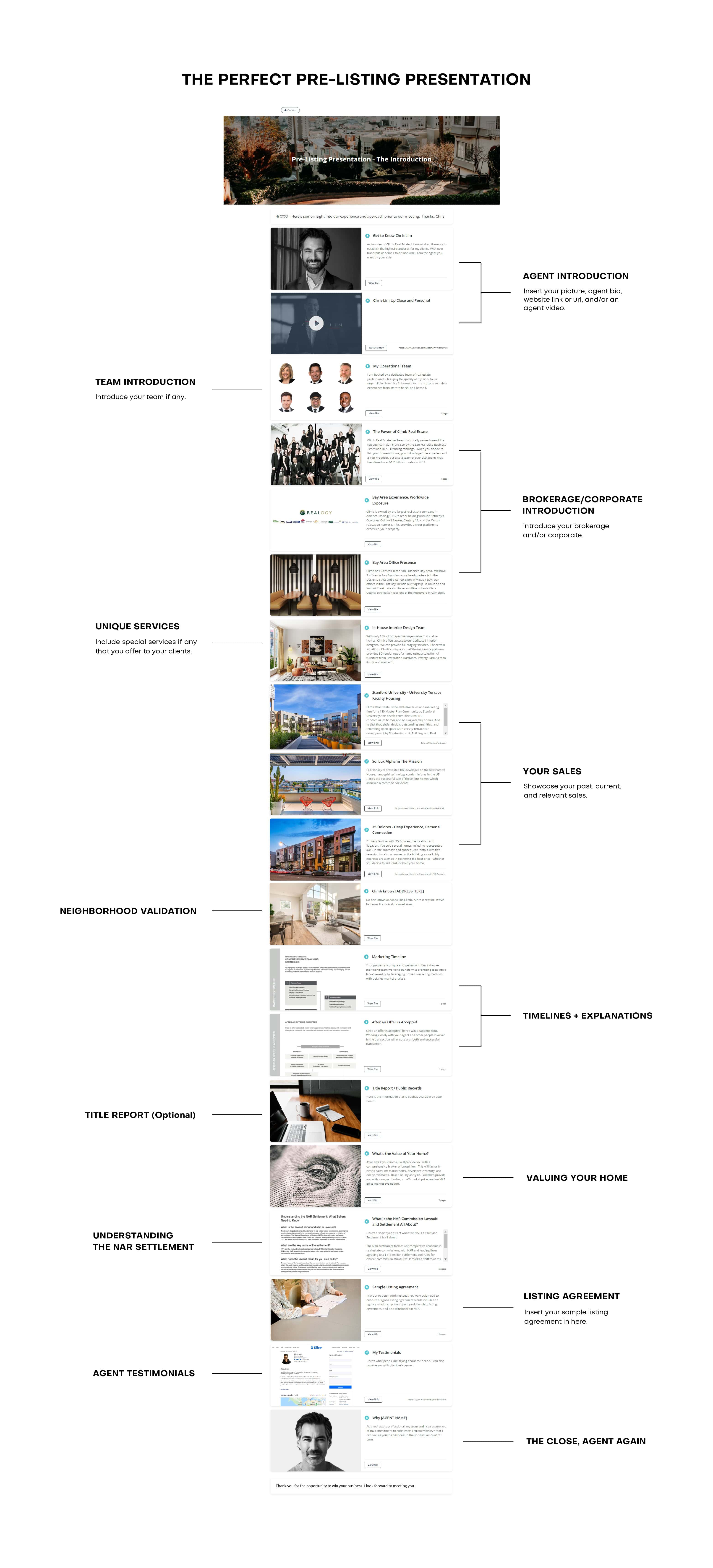
An agent sends a listing presentation to a potential seller. The analytics show the seller spent 11 minutes reviewing comparable sales, returned to the pricing strategy twice, and skipped quickly through the marketing plan.
That pattern suggests the seller’s immediate concern isn’t exposure. It’s whether the agent understands the market well enough to price the property correctly.
Instead of sending a generic check-in, the agent prepares a focused follow-up with three additional comparable properties, explains the recommended pricing range, and outlines how different list prices could affect buyer demand. The agent can also address the skipped marketing section briefly during the call rather than assuming it influenced the decision.
B2B Sales Proposals
A software sales rep sends a proposal after a discovery call. Two days later, the document has been opened several times from different locations.
The security, compliance, and implementation pages receive the most attention, while the feature overview is barely revisited.
That’s a strong sign the conversation has moved beyond initial product interest. New stakeholders are likely evaluating whether the solution can be approved and deployed safely.
Before the next meeting, the rep prepares a security one-pager, implementation timeline, and answers to common procurement questions. They also ask the original contact whether someone from IT, legal, or compliance should join the call.
Instead of waiting for internal objections to slow the deal, the rep helps the buyer build the approval case.
RFPs and RFP Responses
RFPs involve multiple stakeholders, detailed evaluation criteria, and long documents that are rarely read from beginning to end. Document analytics helps both buyers and vendors understand where attention is going.
A procurement team sends an RFP to shortlisted vendors. Analytics show most recipients spend significant time on the evaluation criteria and implementation requirements, but repeatedly skip a technical section. That signals the section may be unclear or overly complex. The team can issue clarification before confusion produces weak, difficult-to-compare responses.
The same insight is valuable on the response side. A vendor submits an RFP response and sees reviewers repeatedly returning to pricing, implementation, and relevant experience. Instead of sending a generic follow-up, the response team prepares a detailed rollout plan, a closely matched case study, and clearer evidence of value for the next conversation.
RFP analytics doesn’t reveal how evaluators will score a submission. It shows where questions, interest, and perceived risk are forming, helping both sides reduce clarification cycles and move toward a more confident decision.
Insurance and Financial Advisors
An advisor sends a benefits or financial strategy overview. The client views it once for 4 minutes, then returns the next morning for a longer session focused on fees, coverage comparisons, and projected outcomes.
That second, deeper session suggests the client has moved from casual review to active evaluation. They may be comparing alternatives, discussing the recommendation with a partner, or identifying questions they want answered before committing.
The advisor follows up with a concise summary of the trade-offs, offers to review the most important scenarios, and schedules a conversation while the decision is still active. The outreach is helpful rather than pushy because it addresses the exact areas most likely to create hesitation.
Recruiting and Staffing Proposals
A staffing firm sends a hiring proposal covering process, candidate sourcing, fees, and expected timelines. The client repeatedly reviews the delivery timeline and replacement guarantee but spends little time on the firm’s company background.
The signal is clear: credibility isn’t the immediate barrier. Execution risk is.
The recruiter follows up with a week-by-week hiring plan, examples of similar placements, and a clearer explanation of what happens if the first hire doesn’t work out. That response reduces uncertainty and moves the conversation closer to a decision.
Agencies and Professional Services
An agency sends a proposal containing strategy, deliverables, timelines, case studies, and pricing. Analytics show strong engagement with deliverables and case studies, followed by repeated visits to the pricing page.
Rather than immediately offering a discount, the agency uses the next call to connect the proposed scope to the outcomes demonstrated in the case studies. If budget is a concern, the agency can discuss phased delivery or scope priorities without weakening the value of the full recommendation.
PDF analytics doesn’t tell the agency exactly what the prospect will decide. It tells them where the decision is happening – and gives them the context to lead a better conversation.
How Highnote's PDF Tracking Feature Works
Highnote’s Share and Track feature was built specifically for sales professionals who need visibility without friction. You upload any PDF, sales deck, or presentation – no redesign, no reformatting required. Highnote converts it into a smart link with built-in tracking.
Once you share the link, the platform captures:
- When the document is opened and by whom
- Time spent per page and total session duration
- Repeat views and session patterns
- Real-time push notifications the moment someone engages
Beyond tracking, Highnote layers AI on top of the engagement data – surfacing insights, flagging high-interest signals, and helping you craft better follow-ups. It also supports AI-powered content generation and personalization, so you can adapt materials for specific prospects without starting from scratch.
Two modes cover different scenarios: Single File Mode for sending a quick proposal or follow-up deck with instant tracking, and Multi File Mode for full presentations combining documents, videos, and links into one polished experience.
Highnote is used by agents across Coldwell Banker, eXp Realty, Keller Williams, Douglas Elliman, Christie’s, and dozens of other brands – but the Share and Track feature applies equally to any professional who sends documents and wants to stop guessing about what happens next. Start for free – no credit card required.
Stop Sending Documents Into the Void
Every sales document you send is a conversation waiting to happen – or a missed opportunity if you can’t read the signals. PDF analytics turns that black box into a data stream: who read what, for how long, when they came back, and where their attention actually landed.
The most successful salespeople aren’t the ones who follow up most aggressively. They’re the ones who follow up at the right moment, with the right context. PDF analytics gives you both.
Frequently Asked Questions
What is PDF analytics?
PDF analytics tracks how recipients interact with your shared documents – including which pages they view, how long they spend on each, how many times they open the file, and whether they share it with others. Unlike basic email open tracking, PDF analytics gives you behavioral data at the page level, which turns document delivery into a source of buyer intent signals.
What does it mean when a prospect views a PDF multiple times?
Multiple views within a short window typically indicate the document is being shared internally, often with a decision-maker or influencer you haven’t spoken to. It’s a strong buying signal. Treat a second or third open as a trigger to follow up – the prospect (or someone they’ve looped in) is actively re-evaluating your materials.
How do I use document tracking to time my follow-ups?
The best follow-ups happen right after a prospect engages with your document. PDF analytics tools with real-time notifications alert you the moment someone opens your file. Following up within minutes of that notification – while your material is in front of them – dramatically increases your chances of a live conversation. Cold follow-ups days later lose this advantage entirely.
Can I track who reads a PDF without them knowing?
Most PDF tracking tools work via smart links rather than embedded trackers – the recipient clicks your link and the platform captures engagement data. Recipients typically don’t see the tracking, though some platforms allow you to add a disclosure. Highnote’s Share and Track feature uses link-based tracking, meaning no software install is needed on the recipient’s side.
Is there a free tool for PDF analytics?
Yes. Highnote offers a free tier with core PDF sharing and tracking capabilities – no credit card required. You get open notifications, viewing time, and engagement insights on your documents. More advanced analytics and AI-powered features are available on paid plans. Sign up for free.