Create polished proposals with our free, customizable accounting and finance proposal templates for accountants, bookkeepers, and financial advisors. Showcase your services, pricing, financial insights, and recommendations with confidence.
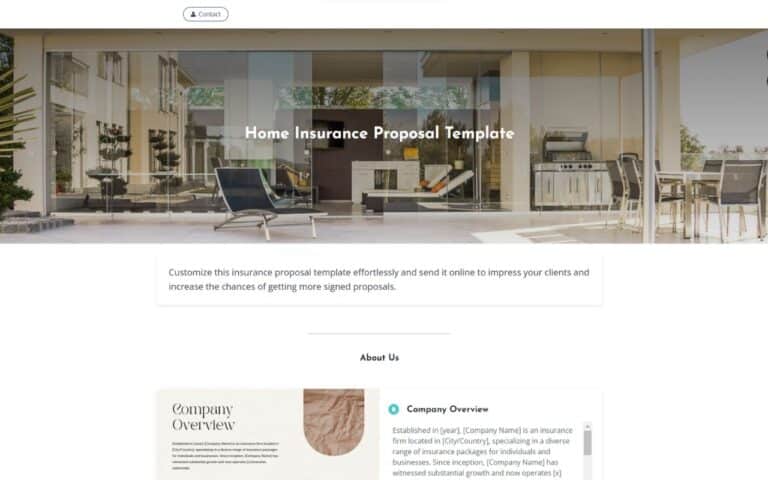
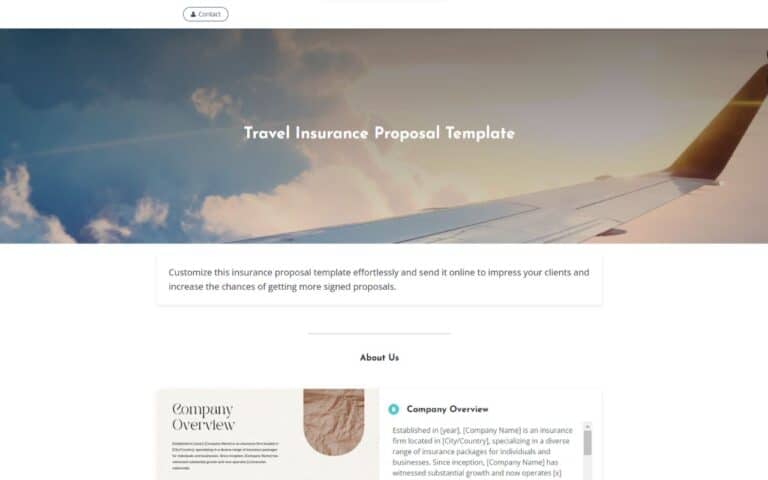
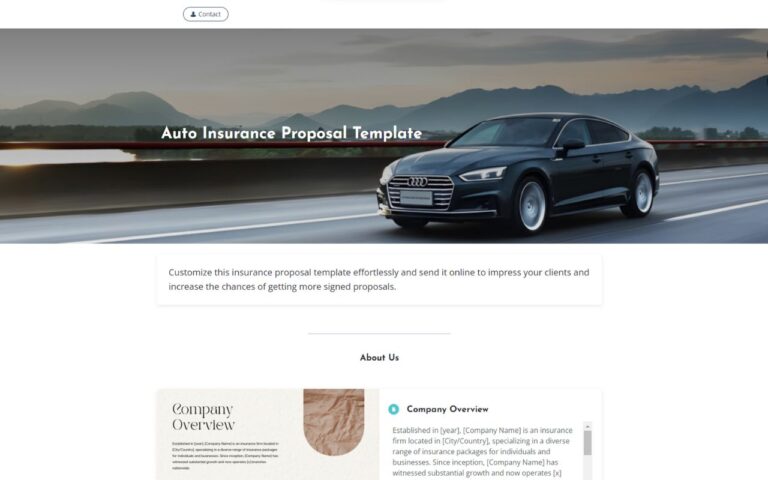
Browse insurance proposal templates built for insurance agents, brokers, and benefits teams. Each template gives you a practical starting structure to help clients compare proposed coverage, limits, exclusions, premiums, and next steps, while leaving room to add your brand, client-specific details, evidence, and supporting files.
Simplify complex policies with clear and engaging insurance proposal templates. Whether you’re an agent, broker, or insurer, these templates help communicate risk management, coverage options, and policy details.
Use the template as a decision framework, not a finished document. A useful insurance proposal template normally makes these elements easy to find:
Remove any section that does not help this audience decide, but do not hide assumptions, exclusions, responsibilities, or material trade-offs.
Use a consistent comparison order for carrier, coverage, limit, deductible, premium, endorsements, and important exclusions. Keep quoted or illustrated values tied to their source and date. The proposal is a summary for discussion; the application, underwriting decision, binder, declarations, endorsements, and issued policy determine actual coverage.
Start with the facts that change from one opportunity to the next: the recipient, current situation, objective, constraints, timing, and decision criteria. Keep repeatable brand and process material in reusable blocks, then replace generic examples with relevant evidence. Before sending, confirm names, dates, figures, links, permissions, and the requested next step.
A Highnote template gives you a reusable starting point while leaving room for client-specific files, visuals, video, links, and supporting material. Share the finished presentation as a link so the recipient can review it without managing a bulky attachment. Highnote’s sharing and analytics tools can also show how recipients interact with the presentation, which can help you prepare a more relevant follow-up.
Watch for the most common failure on this SERP: making the proposal look like the policy itself or hiding material differences between options. Read the page once from the recipient’s point of view. If a key term, number, responsibility, or decision would still require an email to understand, clarify it in the presentation or state exactly where it will be confirmed.
Include the client and risk assumptions, carrier and coverage options, limits, deductibles, premiums, exclusions, endorsements, conditions to bind, and next steps. Make material differences easy to compare.
Use current applicant, property, vehicle, trip, business, or group information as appropriate. Replace sample figures with carrier-supplied values, date the proposal, and have a properly licensed professional review it under applicable rules.
No. A proposal is a summary or illustration for review. It does not create coverage by itself. The application, underwriting decision, binder, declarations, endorsements, and issued policy determine the actual coverage and terms.
Compare like with like: carrier, coverage, limit, deductible, premium, endorsements, exclusions, eligibility, and service. Do not rank options by price alone when coverage or assumptions differ.
Yes. You can organize proposal pages and supporting files in one presentation. Protect sensitive personal information and follow carrier, agency, privacy, recordkeeping, and jurisdiction-specific requirements.
Yes. Use broker-, carrier-, and jurisdiction-approved language explaining that the proposal is informational, subject to underwriting and policy terms, and not evidence that coverage is bound.