

A listing appointment is the moment your preparation, expertise, and personality converge. Agents who walk in with the right questions don’t just gather information—they establish trust, demonstrate professionalism, and dramatically increase their odds of winning the listing.
In this guide, you’ll find 25 proven questions to ask sellers at a listing appointment, organized by category, along with why each question matters and how to use the answers to serve your client better. Whether you’re a seasoned veteran or preparing for your first listing appointment, this framework will sharpen your approach.
Want proof? Explore our Built with Highnote gallery to see how top agents present themselves with professional listing decks that win sellers’ trust.
Quick Stat: According to the National Association of REALTORS®, sellers interview an average of 2 agents before signing a listing agreement. Your questions are your differentiator.
Why Asking the Right Questions Wins Listings
Most agents walk into a listing appointment ready to talk. The best ones walk in ready to listen. Asking thoughtful, structured questions accomplishes three things simultaneously:
- Reveals the seller’s true motivation, timeline, and emotional state—critical for crafting the right marketing and pricing strategy
- Demonstrates your expertise by asking questions sellers haven’t considered, positioning you as the professional in the room
- Creates rapport by showing genuine interest in the seller’s situation, not just the commission
Highnote’s data from thousands of listing presentations shows that agents who incorporate structured seller questioning into their workflow win listings at a higher rate and experience fewer surprises during the transaction.
Before the Appointment: 5 Pre-Listing Questions

1. What's your reason for selling?
Why it matters: Motivation drives everything. A seller relocating for a job has urgency. An empty nester downsizing has flexibility. A divorcing couple may have competing interests. Knowing the “why” before you arrive lets you frame your strategy accordingly.
Pro tip: If they’re vague on the phone, note it—this question becomes even more important to revisit face-to-face.
2. What is your ideal timeline to be in your next home?
Why it matters: Timeline determines pricing strategy. A 30-day close requirement calls for aggressive pricing. A 6-month window allows for a strategic list price to maximize value. Never assume—always ask.
3. Have you spoken with any other agents?
Why it matters: Knowing your competitive landscape lets you differentiate your pitch. If they’ve spoken with three other agents, you need to know what was promised. If you’re their first call, you have the opportunity to set the standard.
4. Is your home currently mortgaged, and do you have any liens or HOA obligations?
Why it matters: Understanding the financial encumbrances on the property is essential for calculating net proceeds and identifying potential deal-blockers before they become surprises at closing.
5. What price are you hoping to achieve?
Why it matters: This is your first data point on seller expectations vs. market reality. It allows you to prepare an honest, data-backed CMA that either validates or gently recalibrates their expectations before you’re in the room.
During the Appointment: 20 Questions Across 5 Categories
These are your listing appointment conversation starters—designed to flow naturally, not feel like an interrogation. Use Highnote’s digital listing presentation to guide the conversation visually while you ask.
Category 1: Motivation & Goals (Questions 6-10)
6. What would make this sale a success for you beyond the final sale price?
Why it matters: Some sellers care more about a smooth transaction than squeezing the last dollar. Others have an emotional attachment to who buys their home. This question uncovers priorities that should shape your entire strategy.
What to listen for: Responses about certainty, speed, privacy, or leaving the home to a “good family” signal values that need to be incorporated into your marketing approach.
7. On a scale of 1 to 10, how motivated are you to sell right now?
Why it matters: This is a professional technique borrowed from coaching methodology. If they say “6,” ask: “What would it take to get you to a 9 or 10?” The answer reveals hidden hesitation—a family member not on board, uncertainty about where to move next, or concerns about timing the market.
8. Are you contingent on purchasing another home?
Why it matters: A contingent seller presents real estate opportunity on both sides. It also means pricing, timing, and possession clauses in the listing agreement need to be carefully coordinated. This question can also open a buyer representation conversation.
9. What does your ideal closing look like—date, possession timeline, and any specific terms?
Why it matters: Many listing appointments collapse at the offer stage because possession preferences weren’t established upfront. Lock this down early so it’s built into your marketing and any negotiations from day one.
10. Is there anything that would prevent you from selling if we received a full-price offer tomorrow?
Why it matters: This is a powerful closing question that surfaces hidden blockers—a spouse who isn’t ready, a permit that was never pulled, or title issues that need resolution. Better to know now than at the contract table.
Category 2: Property Details & Condition (Questions 11-15)
11. Walk me through the improvements you’ve made in the last 5 years.
Why it matters: Sellers often undervalue—or forget—improvements that matter to buyers. A new HVAC, roof replacement, or kitchen remodel can significantly impact pricing and marketing. The more specific you can be in your MLS listing, the better.
What to listen for: Permits pulled, warranties transferred, and contractor names—these details add credibility and buyer confidence.
12. Are there any known repairs or deferred maintenance items I should be aware of?
Why it matters: In most states, sellers are legally required to disclose known material defects. As their agent, you need to know what’s there so you can advise on whether to disclose, repair, or price accordingly. Surprises during inspection are deal-killers.
13. Has the property ever had any water intrusion, mold, or structural issues?
Why it matters: These are among the most sensitive disclosure categories and the most common causes of post-closing litigation. Ask directly. The question itself signals your professionalism and protects both parties.
14. Are there any neighborhood issues I should know about—noise, traffic, planned developments, neighbor disputes?
Why it matters: Hyperlocal knowledge is a competitive advantage. If there’s a commercial development planned nearby, a noisy neighbor, or a flood zone nuance, you need to know—and your buyer will eventually find out. Transparency builds long-term trust.
15. Would you be open to a pre-listing inspection?
Why it matters: A pre-listing inspection ($300-500) can prevent a deal falling apart at the buyer’s inspection contingency. Sellers who understand the ROI of transparency often appreciate this recommendation. It also signals your commitment to a smooth transaction.
Category 3: Pricing & Financial Expectations (Questions 16-18)
16. How did you arrive at the price you mentioned earlier?
Why it matters: This question is not confrontational—it’s educational. Was it based on Zillow’s Zestimate? A neighbor’s sale from 18 months ago? A family member’s opinion? Understanding their logic helps you build a more persuasive, data-driven CMA conversation.
17. Are you prioritizing maximum price, or speed and certainty of close?
Why it matters: These are sometimes mutually exclusive goals. A seller who wants top dollar may need to accept longer market time. A seller who needs certainty may need to price slightly below market for competitive offers. This alignment conversation prevents future frustration.
18. Would you consider offers with contingencies—financing, inspection, or sale of buyer’s home?
Why it matters: In a normalized 2026 market, contingency offers are more common than in peak 2021-2022. Establishing seller flexibility upfront lets you advise on offer evaluation strategically rather than reactively.
Category 5: Decision-Making & Process (Questions 22-25)
22. Who else needs to be involved in the decision to list?
Why it matters: Co-owners, spouses, adult children with power of attorney, or estate trustees can all appear at the last moment if you don’t surface them now. Every decision-maker should be present at the listing appointment—or you’ll likely need to re-present.
23. What does your ideal communication style look like during the listing?
Why it matters: Some sellers want daily texts. Others prefer a weekly email summary. Misaligned communication expectations are the #1 cause of seller dissatisfaction—not outcomes. Set the protocol upfront.
24. Have you worked with a real estate agent before, and how was that experience?
Why it matters: Prior experiences—good or bad—shape expectations. If they had a painful experience with an agent who over-promised, you need to know before you pitch your services. If they had a great experience with someone who retired, you know the bar you’re being held to.
25. Is there anything about the selling process you’re worried about or unclear on?
Why it matters: This is your empathy question. It gives sellers permission to voice fears they might not have raised otherwise—concerns about privacy, the inconvenience of showings, or anxiety about negotiation. Addressing these directly in your listing agreement discussion closes more appointments than any pitch.
Category 4: Showing & Logistics (Questions 19-21)
19. Are there any showing restrictions I should plan around?
Why it matters: Pets, work-from-home schedules, young children’s nap times, or medical equipment can all create showing challenges. The earlier you know, the better you can set expectations with buyer agents and maximize showing volume.
20. Would you be open to staging, and what is your comfort level with that investment?
Why it matters: Staged homes sell 73% faster and for 1-5% more than non-staged homes, according to the Real Estate Staging Association (RESA). Planting this seed early gives sellers time to prepare mentally and financially. Your answer here also signals your marketing sophistication.
21. Do you prefer professional photography, video, and 3D tours—and do you understand how they impact online visibility?
Why it matters: 97% of buyers begin their home search online (NAR, 2024). Professional visual media is no longer optional. This question opens a conversation about your marketing plan and differentiates you from agents who use smartphone photos.
Conducting the Listing Appointment

During the listing appointment, your goal is to establish rapport and continue to understand more about the sellers and their situation. To quickly gain your seller’s trust, express genuine interest in their reasons for moving, or comment on the property’s unique features.
A great example of trust-building in action is Chris Lazarus’s commercial presentation, which blends storytelling and property details in a way that connects with sellers.
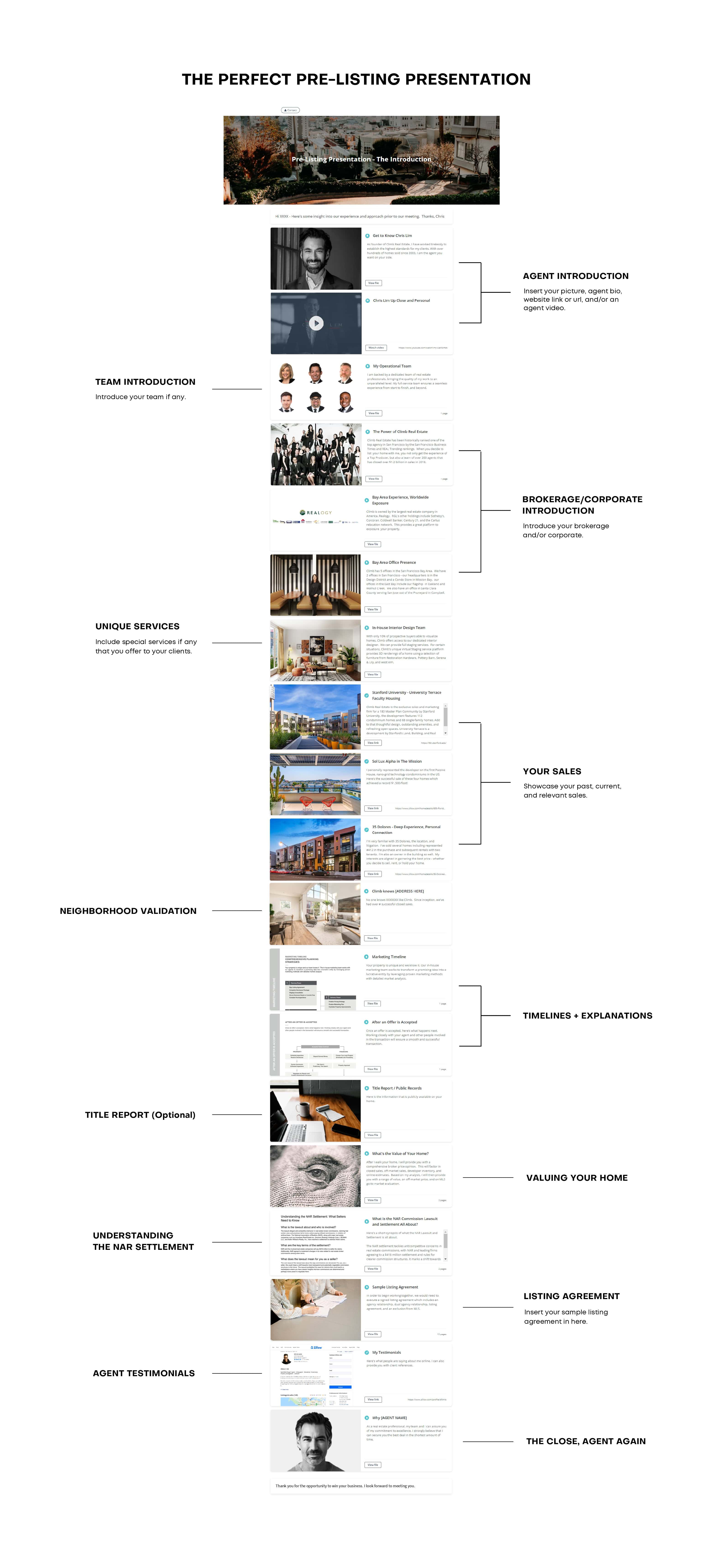
Now you know why we sent the pre-listing presentation—during the listing appointment, you can use Highnote to guide your talking points.
The Listing Appointment Checklist: What to Bring
In addition to your questions, every listing appointment should include the following:
- Your customized CMA with hyperlocal neighborhood comps (not just city-wide data)
- A professional listing presentation built in Highnote with your marketing plan, track record, and testimonials
- Sample marketing materials: examples of your property photography, video tours, and social media campaigns
- A pre-completed listing agreement with the key terms (price, commission, duration) ready to discuss—not fill out from scratch
- Your seller’s net sheet calculator—what they’ll actually take home after commission, closing costs, and any mortgage payoff
- A list of trusted vendors: inspectors, stagers, contractors—demonstrating you’re a full-service resource, not just a sign-poster
Conclusion: Listing Appointment Questions Are Your Competitive Advantage
The best real estate agents aren’t the ones with the glossiest brochures or the boldest commission claims. They’re the ones who make sellers feel genuinely heard, professionally represented, and confident in their decision.
These 25 questions give you the framework to do exactly that. Ask them thoughtfully, listen deeply, and document the answers so your strategy reflects the seller’s real needs—not your assumptions about them.
Ready to take your listing appointments to the next level? Explore Highnote’s real estate presentation templates and see how top agents across the country are winning more listings with a more professional, more personal approach to every seller conversation.
The Advanced System to Winning More Listings
Created by industry veterans, discover the advanced system to winning more listings with this guide. Stand out, shine, and become a listing machine!
Proven System that has won Thousands of Listings. Over $3B and counting!

Just enter your email and get it for free.
After the Appointment: The Follow-Up Strategy
Winning the listing doesn’t always happen in the room. Many sellers are meeting with two or three agents in the same week. Your follow-up is often the deciding factor.
- Send a personalized Highnote follow-up presentation within 24 hours. Include a summary of the property’s competitive position, your proposed marketing plan, and answers to any objections that came up during the appointment.
- Include your digital listing agreement so they can review and sign digitally—remove friction from the decision.
- Add value they didn’t expect: a neighborhood market snapshot, a link to comparable recently sold properties, or a brief video message reinforcing your enthusiasm for their home.
- Use Highnote’s built-in analytics to see when they open your follow-up and which slides they spend time on. Knowing they re-read your marketing strategy slide three times tells you exactly where to focus your next conversation.
One way to reinforce these goals after the meeting is by sending an annual real estate review presentation that helps sellers see their equity position and potential outcomes over time.
Pro Tip: If you use Highnote's presentation platform, you'll receive real-time notifications when your seller opens your follow-up materials—giving you the perfect moment to send a personal check-in message.
Listing Appointment Questions: FAQ
How many questions should I ask at a listing appointment?
Aim for 8-12 questions during the appointment itself, drawn from the 25 above based on what you’ve already learned through your pre-listing outreach. The goal is a conversation, not an interrogation. The most effective listing agents spend 60% of the appointment listening and 40% presenting.
What is the single most important question to ask at a listing appointment?
“What would make this sale a success for you beyond the final price?” This question surfaces the seller’s real priorities—speed, certainty, privacy, or emotional connection to the buyer—and allows you to build your entire strategy around what actually matters to them.
How do I handle a seller who already has a price in mind that's too high?
Don’t challenge it directly in the appointment. Instead, ask how they arrived at that number, validate their perspective, and then present your CMA data as a “reality check from the market.” Frame the conversation as: “Here’s what buyers are telling us through their offers on comparable homes.” Price disagreements are best resolved with data, not debate.
Should I send questions to sellers before the listing appointment?
Yes—a brief pre-listing questionnaire (5-7 questions, completable in under 10 minutes) dramatically improves the quality of your appointment. It signals professionalism, helps sellers organize their thoughts, and lets you tailor your CMA before you arrive. Use Highnote’s templates to send this pre-listing questionnaire digitally with tracking so you know they’ve completed it.
How do I win a listing appointment against a lower-commission agent?
You win on value, not price. Be specific: “I invest in professional photography, 3D virtual tours, targeted social media advertising, and a digital presentation system that lets me show you in real time how many buyers have viewed your home. Let me show you how homes marketed this way sell faster and for more.” Present data, not promises.
What should I do if multiple decision-makers aren't at the appointment?
Reschedule if possible, or propose a brief video call with the absent party before they make a decision. Never pressure a sole attendee to sign without the other decision-maker’s input—it leads to buyer’s remorse, cancellations, and damaged relationships.
How long should a listing appointment last?
45-75 minutes is the sweet spot for most residential listings. Less than 45 minutes suggests you haven’t gone deep enough into the seller’s situation. More than 90 minutes risks exhausting the client before they sign. A well-structured Highnote presentation keeps you on track while ensuring you cover all the essentials.
What's the difference between pre-listing questions and listing appointment questions?
Pre-listing questions are fact-finding: motivation, timeline, rough price expectations. Listing appointment questions are deeper and more strategic: decision-making dynamics, showing logistics, emotional priorities, and pricing philosophy. Both sets are essential—the pre-listing answers inform how you ask the appointment questions.
Highnote helps you create a digital listing presentation that impresses sellers and can help you land more listings than ever.