
I can’t count how many open houses I’ve hosted over the years, but I can tell you this—every time I skipped making a proper flyer, I felt it. Fewer people showed up. The conversations were colder. The follow-up leads? Practically nonexistent.
It didn’t take me long to realize that a well-designed real estate open house flyer isn’t just a nice-to-have—it’s a lead magnet. It sets the tone before a buyer even walks through the door, and it gives them something to hold onto (literally and mentally) after they leave.
But not all flyers are created equal. I’ve seen agents spend hours designing something that looks great but fails to do the job: attract, inform, and convert. That’s why I started treating my open house flyers like mini marketing campaigns. Every element—from the headline to the call to action—is there for a reason.
In this post, I’ll walk you through exactly how I create open house flyers that not only look polished but actually bring buyers through the door—and keep my phone ringing after they leave.
Key Elements of a High-Converting Real Estate Open House Flyer
A good open house flyer isn’t just about looking nice—it needs to grab attention, provide key details, and make it easy for potential buyers to take the next step. Over the years, I’ve refined my flyers to include a few must-have elements that make all the difference.
Eye-Catching Headline That Sparks Interest
The headline is the first thing buyers see, so it needs to do more than just say “Open House.” I like to tailor mine to the property’s unique selling points. For example:
- “Luxury Living in [Neighborhood] – Open House This Sunday!”
- “Charming Craftsman with a Backyard Oasis – Tour This Weekend!”
- “Move-In Ready & Priced to Sell – Don’t Miss This Open House!”
A great headline makes buyers want to come see the home, not just register that there’s an event happening.
Stunning Property Photos That Sell the Home
A flyer with bad photos is a wasted opportunity. I always use:
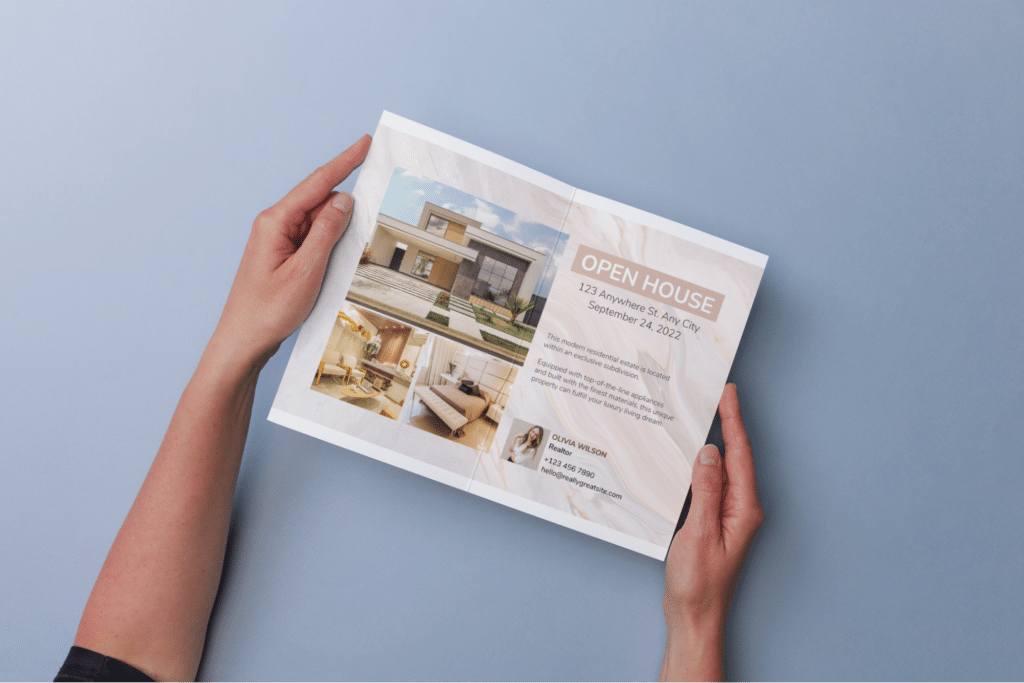
- A hero shot (usually the exterior or the most impressive room)
- A few interior images that highlight the home’s best features
- Professionally edited photos—because dark, blurry pictures kill interest instantly
- View Shots
Must-Know Open House Details
People don’t want to dig for information. I make sure my flyers clearly display:
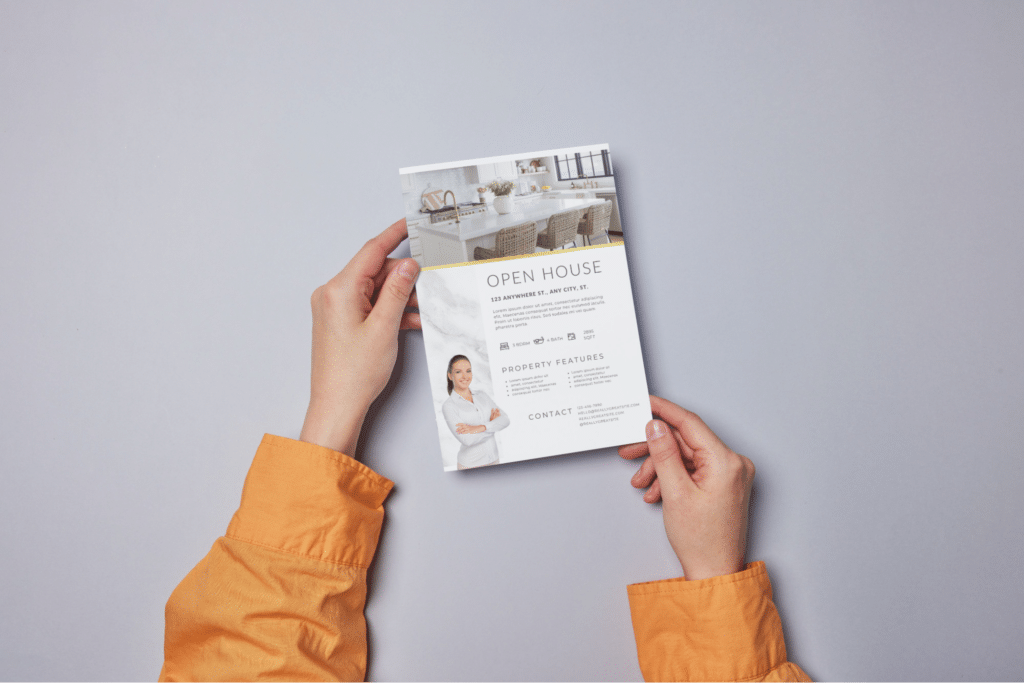
- Date & time: Easy to spot at a glance
- Property address: Large and bold so no one misses it
- Contact info: My phone number and email, sometimes with a QR code for instant contact
- Price
Compelling Property Features
This isn’t an MLS listing—it’s a marketing piece. Instead of dry bullet points, I highlight the home’s biggest selling points in a way that excites buyers. For example:
- Instead of: “4 beds, 3 baths, 2,500 sq ft”
- Try: “Spacious 4-bedroom home with a chef’s kitchen and resort-style backyard”
A Strong Call to Action
A flyer without a clear CTA is a wasted opportunity. I always include something like:
- “Join us this Sunday and see why this home won’t last!”
- “Scan the QR code for a virtual tour before the open house!”
- “Call [Agent Name] at [Phone Number] for a private showing!”
- Thinking about selling your home? Give me a call.
How to Design a Professional-Looking Open House Flyer
A well-designed flyer can make the difference between buyers tossing it in the trash or showing up at your open house. But here’s the good news—you don’t need to be a graphic designer to create one that looks professional.
Choosing the Right Flyer Layout
Your layout should be clean, visually appealing, and easy to read. I’ve found that three basic formats work best:
Flyer Layout Type | Best For | Why It Works |
Single Large Photo with Text Overlay | High-end or luxury listings | The striking image grabs attention and sets the tone for the home’s appeal |
Grid Layout with Multiple Photos | Homes with standout interior spaces | Showcases key features like kitchen, backyard, or master suite at a glance |
Minimalist with Bold Text & Icons | Modern or new-construction homes | Clean and professional, gets straight to the point |
No matter the layout, leave white space so the flyer doesn’t feel cluttered. Too much text or too many photos can overwhelm readers.
Picking the Right Colors and Fonts
Your color scheme should complement the home and reflect your brand. Some guidelines I stick to:
- Luxury homes: Deep blues, blacks, golds, or silvers for an elegant feel
- Modern homes: Neutral tones with a pop of color (navy, green, or burnt orange)
- Family-friendly homes: Warm, inviting colors like soft blues, greens, or earth tones
For fonts, I use a combination of:
- Bold, modern fonts (like Montserrat or Lato) for the headline
- Clean, readable fonts (like Open Sans or Roboto) for the details
- Make the fonts large enough that people can read the headlines without needing their reading glasses!
Using High-Quality Images and Graphics
Nothing kills a flyer’s effectiveness faster than low-quality images. Here’s what I recommend:
- Use professional photography—or at least edit smartphone photos for brightness and clarity
- Add icons for key features (like a pool, fireplace, or garage) to break up text
- Include a QR code linking to a virtual tour, video walkthrough, or property page
Tools to Create a Flyer (No Design Skills Needed)
You don’t have to hire a designer to create a polished flyer. Some of my go-to tools include:
Tool | Why I Use It |
Canva | Easy-to-use templates, drag-and-drop features |
Adobe Express | Professional-quality design with branding options |
Highnote | Perfect for digital presentations that showcase multiple homes |
Fiverr or Upwork | Affordable designers if you want something custom |
With the right design choices, your flyer can make a lasting impression and get more buyers through the door. Next, I’ll cover distribution strategies—because even the best flyer won’t work if no one sees it.
How to Distribute Your Open House Flyer for Maximum Exposure
A great flyer is only as good as the number of people who see it. I’ve tested various distribution methods over the years, and these are the ones that consistently get the best results.
Hand-Delivering Flyers in the Neighborhood
Before every open house, I make it a point to walk the neighborhood and hand out flyers—or, if I’m pressed for time, I’ll have a team member or assistant do it. Why?
- Neighbors are your best word-of-mouth marketers—they may have friends or family looking to move into the area.
- It builds relationships—future sellers see your efforts and may consider you when they list their home.
- It creates a sense of urgency—a “coming soon” or “exclusive showing” note on the flyer encourages curiosity.
If knocking on doors isn’t an option, door hangers with your open house flyer work just as well.
Leveraging Local Businesses and Community Boards
Some of the best places to leave flyers include:
- Coffee shops and cafés—people linger here, giving them time to read your flyer.
- Local gyms or yoga studios—great for targeting specific demographics, like young professionals or families.
- Grocery stores and community centers—high foot traffic areas mean more eyeballs on your listing.
- Local hotels
When I drop off flyers, I always talk to the business owner or manager first. Many are happy to support local real estate agents, especially if you build a relationship with them over time.
Mailing Flyers to Targeted Buyer Lists
Direct mail still works—if done correctly. Instead of blindly sending flyers to every home in town, I recommend:
- Targeting neighborhoods with move-up buyers—people who are looking to upsize or downsize.
- Mailing to renters—they may be ready to buy and could be drawn to your open house.
- Sending a teaser postcard first—a high-quality postcard with a QR code leading to a full digital flyer can warm up interest.
I also track my response rates—if a particular zip code or neighborhood consistently performs well, I’ll focus more marketing efforts there in the future.
Digital Distribution: Getting More Eyes on Your Flyer Online
Print flyers are great, but digital flyers reach an even wider audience. Here’s how I maximize exposure online:
Platform | How to Use It |
Social Media (Facebook, Instagram, LinkedIn) | Post your flyer with an engaging caption and run a small ad targeting local buyers |
Facebook Groups & Nextdoor | Share the flyer in neighborhood and real estate groups |
Email Marketing | Send the flyer to your database with a personal note about the listing |
Real Estate Websites (Zillow, Realtor.com, MLS Listings) | Upload the flyer as a downloadable PDF |
Bonus Tip: If I want to drive more engagement, I create a short video walkthrough of the property and include the flyer as a pinned comment or overlay.
How to Track and Measure the Success of Your Open House Flyer
Creating and distributing your flyer is only part of the equation—tracking its effectiveness ensures you’re not wasting time or money on strategies that don’t work. Over the years, I’ve refined a few key ways to measure how well my flyers perform.
Tracking Response Rates from Print Flyers
I always include a call to action (CTA) with a tracking mechanism to see where leads are coming from. Here are some easy ways to track response rates from your print flyers:
- Unique QR Codes – I generate a different QR code for each distribution method (e.g., neighborhood handouts vs. coffee shop flyers). Tools like Bit.ly or Google Analytics help track clicks.
Custom URLs – Instead of a generic website, I use a URL like YourOpenHouse.com/123MainStreet so I can see exactly how many people visit from the flyer. - Dedicated Phone Number or Extension – Some agents use Google Voice or call-tracking services to assign a unique number to their flyers.
- Opens/Click-thru with digital flyers
After every open house, I check the data to see which distribution methods got the most engagement.
Using Digital Analytics for Online Flyer Performance
If you’re distributing your flyer online, analytics are your best friend. Here’s how I track engagement:
Platform | Tracking Method | What It Tells You |
Facebook & Instagram Ads | Ad insights (click-through rates, engagement) | Which audience segments are interested in the listing |
Email Marketing | Open rates & link clicks | How many people are engaging with the flyer |
QR Codes | Scan data | Which locations or distribution methods drive traffic |
Google Analytics | Page visits & bounce rate | If people are viewing your flyer and staying to learn more |
Highnote | Live Opens, Views, Analytics | Shows who, what and how long viewers are reviewing each section |
For example, if I notice a lot of QR code scans from a certain coffee shop, I’ll double down on placing flyers there for future open houses.
Asking Open House Attendees How They Found You
At every open house, I make it a point to ask attendees a simple question:
“How did you hear about this open house?”
If several people mention the flyer they received in the mail or saw in a local café, I know that method is working. If nobody mentions it, I adjust my strategy.
Adjusting Your Flyer Strategy for Future Open Houses
Once you’ve gathered data, use it to refine your approach. Here’s what I typically adjust:
- Flyer design & messaging – If one version gets more responses than another, I analyze what made it stand out.
- Distribution channels – If door-knocking worked better than mailing, I shift my budget accordingly.
- Call-to-action placement – I experiment with different CTA placements (top of the flyer vs. bottom) to see what drives more engagement.
By tracking results, you’ll turn your flyer strategy into a data-driven marketing tool that consistently attracts more buyers to your open houses.
Real-World Example: How a Small Change Boosted My Flyer’s Success
A few years ago, I was hosting an open house in a competitive market. I designed a flyer with beautiful photos, a QR code linking to the virtual tour, and a simple call to action: “Scan to RSVP.”
The results? Barely any scans.
For the next open house, I made one small tweak—I changed the CTA to “Scan to see inside before the open house!” That subtle shift doubled the number of QR code scans. People were curious to get a sneak peek before they showed up in person.
The lesson? Your wording matters. A flyer isn’t just about looking good—it needs to create urgency and make it easy for potential buyers to engage.